4 min read
Fermented Flavors of Empire: Aging Fish and Koji in Historic Court Kitchens
Moran Sapir
Author

Moran Sapir
Author
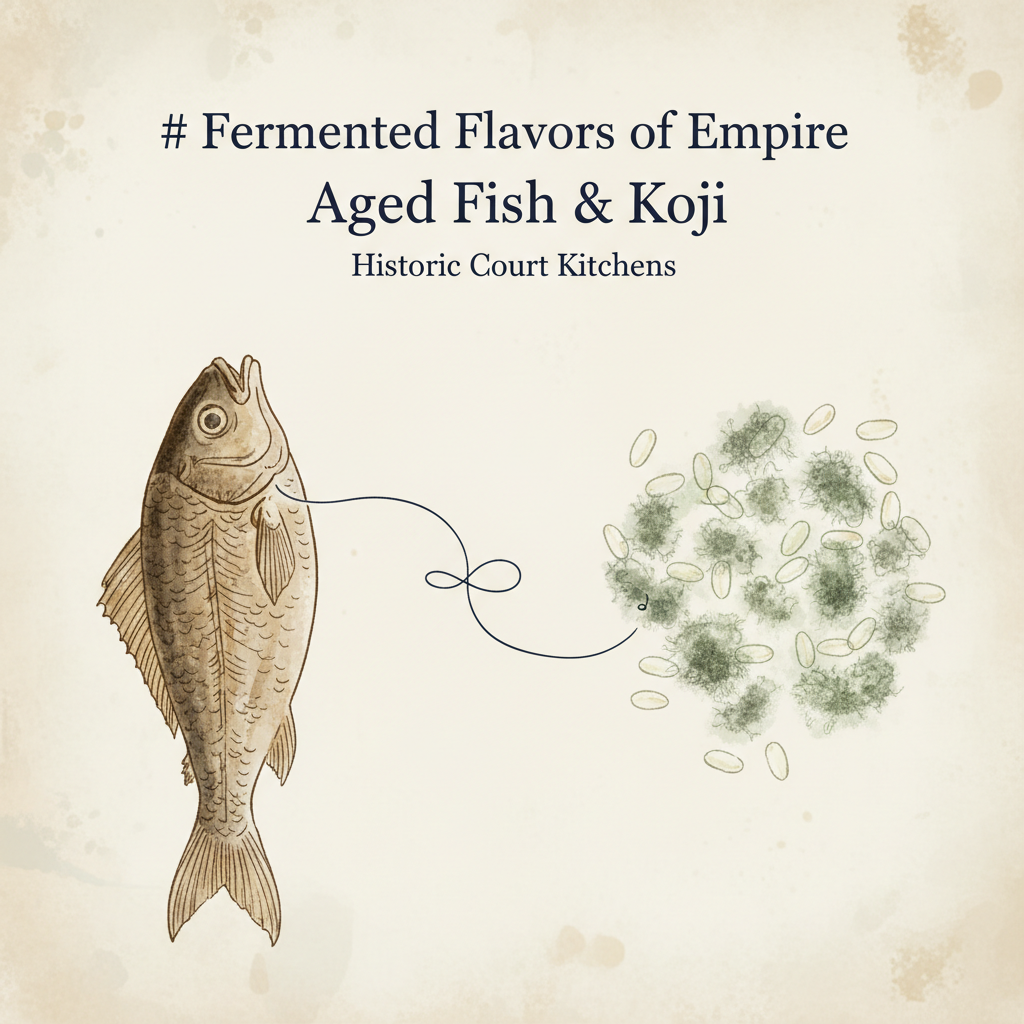
In the grand kitchens of empires past, where the clinking of utensils was the soundtrack of opulence, two humble ingredients emerged as pillars of culinary artistry: aged fish and koji. These fermented components played pivotal roles in shaping the flavors that defined royal banquets and regional cuisines. As interest in fermentation resurges in modern kitchens, understanding the historic significance of these ingredients reveals much about the evolution of taste and preservation.
Aging fish is not merely a preservation method; it’s a revered practice that unlocks flavors through time. In historic court kitchens, chefs would use techniques that dated back centuries. Salted or dried fish, sometimes aged for months, developed a concentrated taste that was both savory and complex. This process not only extended the fish's shelf life but also deepened its flavor profile, creating an exquisite ingredient for grand feasts.
Take, for instance, the renowned Japanese delicacy, fermented fish known as narezushi. This dish, hailed as one of the earliest forms of sushi, involves wrapping fish in fermented rice, allowing it to age into a unique, savory treat. Such practices reflect a deep understanding of fermentation's transformative power, leading to culinary innovations that were celebrated in royal courts.
At the heart of many fermented foods lies koji, a mold (Aspergillus oryzae) that plays a crucial role in Japanese cuisine. Initially cultivated for sake production, koji’s enzymes break down starches into sugars, enhancing umami flavors in various dishes. The fermentation process is an intricate dance of temperature, humidity, and timing, where master brewers and chefs engage in a ritual that has been passed down through generations.
The production of koji is not just a scientific process; it's a cultural practice steeped in tradition. In the production of sake, koji goes through distinct phases: first, the mold is cultivated on polished rice, then it is mixed with steamed rice and water to kickstart fermentation. This careful orchestration results in a beverage celebrated for its depth and character. Chefs today harness koji not just in sake but in various applications, from marinades to sauces, adding a distinct umami punch to modern dishes.
The beauty of koji lies in its versatility. As it matures, its enzymes continue to work, creating a spectrum of flavors that can range from sweet to savory. This adaptability allows chefs to experiment with different aging times and conditions, leading to unique culinary creations. For example, koji can be used to ferment vegetables, producing rich, complex flavors that enhance everything from pickles to sauces.
In contemporary fine dining, chefs are rediscovering koji's potential, incorporating it into dishes to elevate flavors. The rise of fermentation as a trend reflects a broader shift towards embracing traditional methods that emphasize depth and complexity. As diners become more adventurous, the inclusion of koji in modern cuisine not only pays homage to its rich history but also contributes to a growing appreciation for fermented flavors.
The exploration of aged fish and koji in historic court kitchens offers a fascinating glimpse into the culinary practices that shaped empires. These ingredients, once reserved for the tables of royalty, have transcended their origins to influence modern cooking. As chefs continue to delve into the world of fermentation, understanding the historical roots of these flavors can inspire creative culinary endeavors. Embracing the past may lead to new traditions, enriching the culinary landscape for future generations. So, the next time you savor a dish infused with koji or aged fish, remember you’re tasting a piece of history, a link to a time when flavor was an empire’s most coveted treasure.