4 min read
Tea-Infused Broths: A Regal Technique for Umami Depth in Fine Dining
Lila Odin
Author

Lila Odin
Author
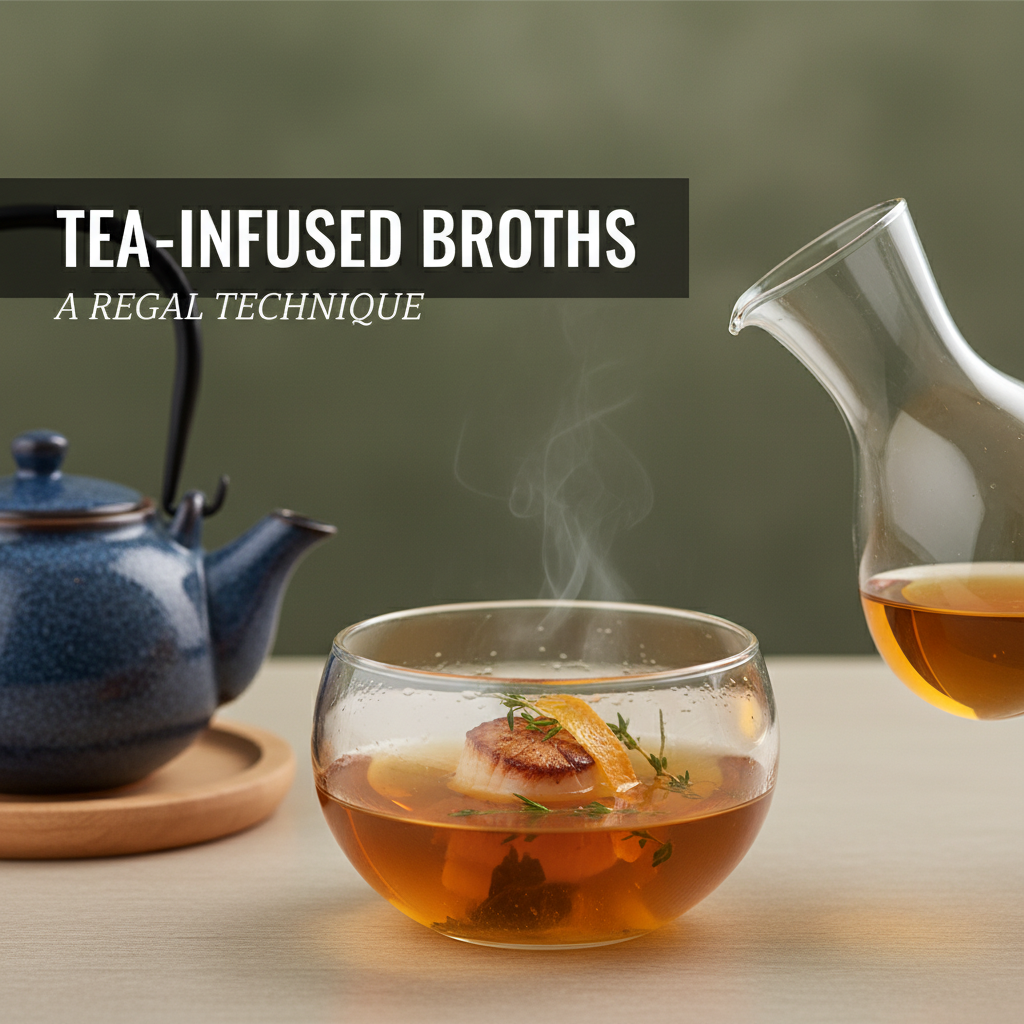
Imagine taking a delicate cup of tea and transforming it into a broth that elevates a fine dining experience. Tea-infused broths are not just a trend; they’re a sophisticated technique that brings out layers of umami, depth, and complexity in culinary creations. Chefs are now embracing this regal method, using it as a canvas for creativity in both savory and sweet dishes.
Brewing tea isn’t just about steeping leaves in hot water. A cold brew of Gyokuro, a premium Japanese green tea, showcases an exquisite profile—delicate, sweet, and refreshingly clean. This tea’s subtle sweetness translates beautifully into a broth, where it becomes a foundation for other flavors to build upon. Imagine a delicate seafood dish, elevated by a broth that hints at the ocean but is also layered with the nuanced sweetness of tea.
Broths made from tea offer a unique umami depth. Unlike traditional stock, which often relies on meat bones for richness, tea-infused broths allow chefs to explore flavors without the heaviness. Chefs can play with the inherent qualities of different teas, tailoring their dishes to the drink and food pairings that complement each other.
The beauty of tea-infused broths lies in their versatility. Take genmaicha, a Japanese green tea combined with roasted brown rice. When brewed and chilled, it can replace water in a rice cooker, imparting a subtle nuttiness to the rice. This technique opens a world of possibilities for chefs looking to introduce unique flavor profiles into their dishes.
Imagine a broth made with a fragrant Earl Grey tea, its bergamot notes lending a citrusy brightness to a creamy risotto. Or consider a smoky Lapsang Souchong broth, which could enhance a rich mushroom soup, adding depth and intrigue. The possibilities are endless, and the results are often surprising.
In fine dining, presentation is paramount. Serving a dish with a tea-infused broth requires not just culinary skill but also an eye for aesthetics. When paired with the right elements, the broth can serve as a visual and flavorful centerpiece. For instance, a carefully crafted tea broth can be poured tableside over a dish, allowing the aroma to envelop the guests before they even take a bite.
Consider a Japanese-inspired Saturday lunch featuring a cold-brewed fukamushi sencha. Served from a beautiful HARIO tea pot, the tea's vibrant color and fresh aroma enhance not just the meal but the entire dining experience. Such attention to detail not only elevates the dish but also invites diners to engage more deeply with their meal.
As chefs continue to experiment with tea-infused broths, the culinary landscape will likely shift. We're seeing a movement toward lighter, more nuanced dishes that focus on clean flavors. This technique encourages chefs to think outside the box and consider how tea can enhance the dining experience.
The art of brewing and infusing tea into broths is a testament to the endless possibilities within culinary innovation. It invites chefs to explore flavor combinations that might have previously gone unnoticed. The next time you dine in a fine restaurant, keep an eye out for tea-infused broths. They may just be the key to unlocking a whole new realm of taste.
Tea-infused broths represent more than just a culinary trend; they are a celebration of flavor, tradition, and innovation. By harnessing the unique characteristics of various teas, chefs can create dishes that resonate with depth and complexity. So, the next time you're in the kitchen, consider brewing a cup of tea and transforming it into a broth—it might just be the regal touch your dish needs.