5 min read
Trolley Service Majesty: Guéridon Rituals from Versailles to Modern Dining
Emile Bartow
Author
Emile Bartow
Author
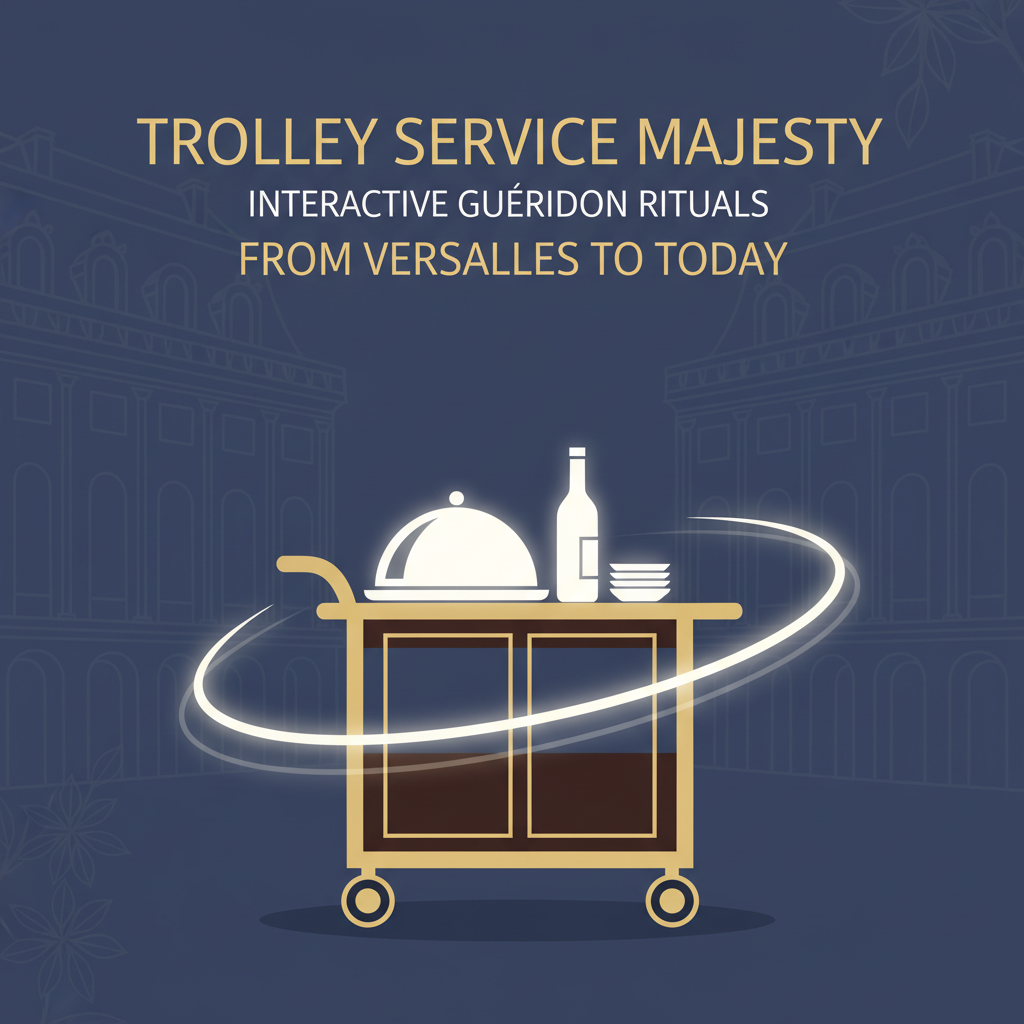
Picture a grand dining room in the Palace of Versailles, where elegantly dressed courtiers watch in hushed anticipation. A server approaches with a guéridon—a small, wheeled table—adorned with fragrant dishes, exquisite wines, and elegant presentations. This interactive ritual, known as trolley service, has evolved from the opulence of royal courts to modern dining experiences, captivating diners with its theatricality and flair.
The roots of guéridon service can be traced back to the court of Louis XIV, where opulence reigned supreme. The French monarch understood the power of spectacle in reinforcing his authority. By employing chefs who prepared meals in front of guests, he not only displayed culinary mastery but also solidified social hierarchies. As Kimberly Chrisman-Campbell notes in her work on the politics of attachment at Versailles, food became a medium through which power was negotiated.
This interactive dining experience allowed guests to engage with their meals, creating a sense of intimacy and exclusivity. The use of trolleys added a touch of theatricality, as servers would glide through rooms with beautifully arranged dishes, presenting each course with flair. The experience was not merely about sustenance; it was an art form, a way to communicate status and sophistication.
As time passed, the concept of trolley service spread beyond France. By the 19th century, it had made its way into fine dining restaurants across Europe and the Americas. The essence of guéridon service remained intact: a focus on the performative aspect of dining. In places like London and New York, chefs embraced this tradition, elevating it with new culinary techniques and ingredients.
Today, the interactive nature of trolley service is more relevant than ever. Diners seek experiences that engage their senses and create lasting memories. Restaurants are now blending traditional guéridon techniques with modern gastronomy, presenting everything from flambéed desserts to tableside-carved meats. This fusion of old and new not only honors the past but also captivates contemporary audiences.
In upscale restaurants worldwide, diners are drawn to the experience of watching their food being prepared. The sight of a chef skillfully slicing a tender steak or flambéing a dessert adds an element of drama to the meal. The connection between chef and guest is amplified, fostering a sense of community and engagement that is often lost in more traditional dining setups.
Moreover, the revival of this age-old ritual speaks to larger culinary trends. With the rise of farm-to-table movements, many restaurants are now emphasizing the origins of their ingredients. Diners appreciate knowing where their food comes from. As the trolley rolls in, it brings with it not just a meal but a story—a narrative of the land, the farmers, and the chefs who brought it to life.
Looking ahead, the future of guéridon service will likely incorporate sustainability and innovation. As restaurants strive to minimize their environmental impact, chefs will seek ways to adapt traditional trolley service to reflect these values. This could mean using local, organic produce or incorporating eco-friendly materials into the trolleys themselves.
Additionally, technological advancements may play a role in this evolution. Imagine a guéridon that not only serves food but also integrates augmented reality, offering diners a glimpse into the journey of their meal from farm to table. Such innovations could bridge the gap between tradition and modernity, making the trolley service experience even more immersive.
As the culinary landscape continues to evolve, the challenge remains: how to keep the spirit of guéridon service alive while adapting to changing consumer preferences. For chefs and restaurateurs, it’s about striking a balance between honoring tradition and embracing innovation. The artistry of trolley service, with its roots in the grandeur of Versailles, invites us to savor not just food but the stories and experiences that shape our dining culture.
So, the next time you encounter a guéridon rolling toward your table, take a moment to appreciate the legacy behind it. It’s more than just a meal; it’s an invitation to partake in a ritual that spans centuries, inviting you to engage with the history and artistry of culinary excellence.